
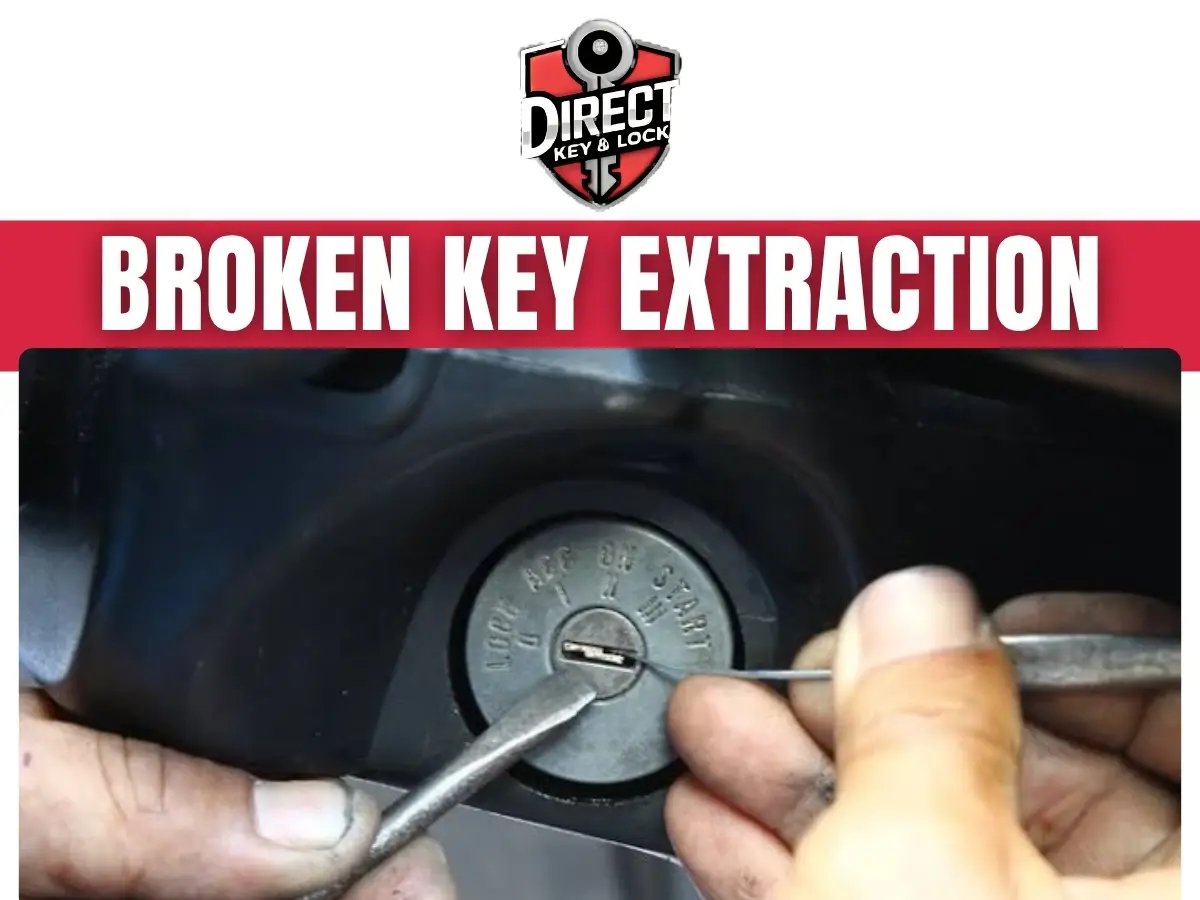
Broken key extraction in Cypress is the careful removal of a snapped key from a lock cylinder. Direct Key & Lock helps homeowners and businesses in Cypress, TX, remove lodged pieces, check the lock’s condition, and determine what is needed to restore access without forcing the lock or causing avoidable damage.
A key can snap while you are leaving for work, closing a shop, or opening a side door. The piece left inside may block another key or stop the cylinder from turning. Pushing harder rarely helps, and it can turn a simple obstruction into a damaged lock.
Call (346) 412-0490 or visit our homepage to discuss the lock and what happened. Tell us whether the door is open or closed and whether any key metal is visible.
Broken key extraction removes the metal fragment blocking the keyway so the lock can be checked safely. The goal is not simply to pull out a piece and assume everything works.
A lock may still have a problem after the fragment comes out. The cylinder could be worn, the key could have been poorly cut, or the door could be pressing against the latch. We check for those conditions before recommending the next step.
Does your spare key usually need a wiggle before it turns? That detail matters because the break may be a symptom of an existing issue.
Extraction and restoring access are also separate tasks. If the cylinder stopped between its normal positions, removing the fragment alone may not open the door. We explain what we find and discuss any further work, such as home lock repair, needed before proceeding.
The safest first move is to stop using the lock and avoid pushing anything into the keyway. Further pressure can move the fragment farther inside or affect the small internal components.
Keep the piece still in your hand, even if it looks useless. It may help us understand the break and assess the remaining key blade.
Avoid repeated experiments while you wait for help.
A snapped key has already had a rough day. It does not need a second tool wedged beside it.
A visible piece of metal or a key that suddenly looks shorter can indicate a broken blade inside the cylinder. The fragment may sit near the opening, flush with the face, or beyond view.
Sometimes the break is obvious because the key head comes away in your hand. Other times, a small tip breaks off and the key still looks nearly complete. Compare it with a known working spare if you have one.
These signs do not prove that extraction is the only work needed. Debris or internal damage can cause similar symptoms and may require lock repair, so describe what happened rather than forcing a diagnosis with another key.
Keys often break after repeated bending, wear, or excess force against a lock that resists turning. The final turn may only expose a weakness that developed over time.
A bent blade should not be straightened repeatedly and put back into daily use. Small cracks can be hard to see, especially near the key shoulder or along thin cuts. A key that has become difficult to use deserves attention before it snaps. Discuss a usable spare for your home rather than continuing to rely on a damaged key.
The door can contribute, too. A loose hinge or shifted strike plate can put pressure on the latch or deadbolt. You may find yourself lifting the handle or pulling the door tightly while turning the key.
Outdoor locks around Cypress, Texas, also face moisture, dust, and regular weather exposure. Those conditions can contribute to corrosion or sticking that needs home lock repair. The useful question is not just “Why did the key break?” but “What made turning it difficult?”
Glue, sharp objects, and repeated grabbing attempts can damage the cylinder or bury the broken piece. A visible fragment does not always have enough exposed metal for a safe grip.
Glue can spread beyond the broken surface and bond moving components. A paper clip or screwdriver may push the fragment backward rather than pull it forward. Drilling without a clear assessment can damage a cylinder that might otherwise remain usable.
A lock may call for a compatible lubricant, but product choice matters. Tell us if you have already applied anything or used a tool when discussing help with a home lock. That information helps us assess the condition without judgment.
Broken key extraction in Cypress begins with checking where the fragment sits and whether the cylinder is under pressure. We also ask how the key behaved before it broke.
Please have identification and information showing your connection to the property ready. We may need to confirm authorization before working on the lock.
Not every lock follows the same path. We explain when a complication changes the work needed.
A broken piece near the lock face may call for a different method than a fragment lodged farther inside. The cylinder’s position and the shape of the break also affect access.
A blade with an exposed edge may offer a usable gripping point. A piece sitting flush may need a thin extraction tool that works beside the blade. If the cylinder is partly turned, it may need careful repositioning before removal is possible.
We cannot judge every condition from a phone description or photo. Those details can still help us understand the situation and explain what needs an on-site check.
A home lock should be checked for smooth key movement and proper door fit after extraction. Removing the metal does not correct a deadbolt that binds against its strike or eliminate the need for residential lock repair.
Front doors, back doors, garage entry doors, and side doors can all develop different wear patterns. A frequently used entrance may show key wear, while an exposed side door may develop sticking after long periods without use.
If the door is open, testing it in that position can help separate cylinder trouble from door alignment trouble. A lock that works open but resists when closed may be meeting pressure at the frame.
Do you normally pull the door toward you before turning the key? Tell us before testing begins. That habit can point to a fit issue that needs attention, not a stronger replacement key.
Keep another usable entrance accessible when possible. Avoid closing an open door just to see whether the lock will work again.
A broken key at a business can affect both access and daily operations, so clear communication helps reduce disruption. When arranging commercial locksmith help, tell us whether the affected lock serves a main entrance, employee door, storage space, or another area.
If several people use the same cylinder, ask them to stop trying their keys. Repeated attempts can push the fragment farther inside. Keep a usable entrance available where safe, and never block an emergency exit.
Some business locks have special key controls or hardware requirements. Let us know what you know about the system. We can discuss the situation without assuming every cylinder accepts the same extraction or replacement method.
Vehicle ignitions, mailboxes, padlocks, and cabinet locks require lock-specific assessment before an extraction approach is chosen. Do not assume a method used on a front door is suitable for these locks.
For a vehicle key extraction, provide the year, make, model, and whether the key broke in a door or ignition. Ask us to confirm service suitability for that vehicle before arranging work. Avoid forcing the ignition or inserting the remaining blade to try starting it.
For a mailbox or shared-access lock, explain who owns or manages the hardware. Some situations, including mailbox lock replacement, require coordination with the property manager or the responsible service provider.
With cabinets and padlocks, access to the cylinder can be limited by the surrounding hardware. A clear photo may help explain the location, though it cannot show every internal condition. Confirm the lock type when calling so the next step is based on the actual problem.
The time needed depends on the fragment’s position, the lock’s condition, and any damage from earlier attempts. A piece you can see is not always easy to remove.
A clean break in an otherwise working cylinder presents a different situation from a twisted fragment in a worn lock. Glue, corrosion, and trapped objects can add work. Door pressure can also complicate the process.
Separate travel availability from the work itself when discussing timing. Call for current locksmith scheduling information rather than assuming an arrival window.
If someone faces immediate danger behind a locked door, contact emergency services first. Routine extraction should not delay help for a person at risk.
A clear work area and an accurate description help us focus on the affected lock. There is no need to dismantle the hardware before the visit.
Move bags, furniture, or stored items away from the door if you can do so safely. Secure pets away from the work area and keep children clear of tools. If the problem is at a business, let the person meeting us for commercial locksmith work know which entrance to use.
Mention any recent sticking, key bending, or door movement. Even a small detail, like needing to lift the handle, can help explain why the key was under strain.
The lock needs an operation check after removal, and the broken key needs to be taken out of use. Holding the pieces together or gluing the blade is not a practical fix.
When a suitable working key is available, testing can show whether the cylinder turns without excess force. We also check whether the latch or deadbolt moves properly. If the door is open, it should stay open until testing supports closing it safely.
A usable cylinder may not need replacement simply because a key broke inside it. A damaged or badly worn cylinder may need further work, such as home lock replacement or commercial lock repair. We explain the observed condition rather than treating replacement as automatic.
For ongoing care, stop using keys that bend, catch, or need repeated wiggling. Discuss a working spare key when needed. Use only a lubricant appropriate for the lock and its manufacturer’s instructions. Report returning resistance early instead of teaching everyone in the house a special door-opening trick.
Broken key extraction in Cypress starts with a clear description of the lock, the break, and your access situation. Direct Key & Lock can discuss the problem and help you determine the next step.
Whether the fragment is visible or hidden inside, avoid forcing the cylinder while arranging help. Keep the broken pieces and tell us about any earlier attempts to remove them.
Call (346) 412-0490 or use our contact page to contact Direct Key & Lock in Cypress, TX. Let us know what kind of lock is affected, whether the door is open or closed, and whether you have another way inside.
Broken key extraction is the removal of a key fragment lodged inside a lock. Direct Key & Lock provides this service.
Keys can break because of wear, damage, or resistance when turning in a lock.
Avoid forcing the lock or pushing the fragment farther inside, and contact a locksmith for guidance.
A lodged fragment may prevent normal operation. Avoid using the lock until the issue has been addressed.
Attempting removal may push the fragment deeper or damage the lock. A locksmith can assess the situation.
Not necessarily. Whether repair or replacement is needed depends on the lock’s condition.
Extraction may be possible, but the approach depends on the fragment’s position and the lock’s condition.
You may need a replacement key if you do not have a usable spare.
Avoid using bent or worn keys, and seek guidance if a lock becomes difficult to operate.
Contact Direct Key & Lock to discuss broken key extraction and your lock situation.